Smart Cables, Intelligent Connectors & Actuating Textiles | AI & Microprocessing at the nervous system level
The 1XTECH® Nervous System of Embodied AI, Robotics, Spaceflight, and Resilient Infrastructure
Foundations, Taxonomy & Strategic Context
In advanced machines and critical systems, cables and connectors have never been simple passive infrastructure. In robotics, aerospace, spaceflight, subsea operations, AI hardware platforms, and high-reliability industrial equipment, they frequently rank among the highest-cost and most technically sophisticated subsystems in the entire architecture.
While some outside observers may still underestimate cabling as little more than “wiring,” engineers and operators in demanding environments have always recognized that the cable harness is often the limiting factor in performance, reliability, lifecycle cost, and mission success. Requirements for extreme flex life (millions of cycles), high power density, signal integrity under motion, environmental resilience, and integrated intelligence make advanced cabling one of the most challenging and valuable engineering domains in modern systems (Ruckdashel et al., 2022).
Why 1XTECH® Intelligent Cabling Matters in Extreme and High-Performance Domains
Several structural trends are driving the evolution of cabling from high-performance passive elements into intelligent, active components:
- Robotics across industrial arms, mobile platforms, inspection systems, aerial, and undersea applications demand harnesses that survive tens of millions of complex motion cycles while carrying power, high-bandwidth feedback, and additional media.
- Aerospace and spaceflight require lightweight, radiation-tolerant, high-reliability cables and connectors capable of withstanding vacuum, extreme temperatures, vibration, and radiation while maintaining signal integrity over long missions. Emerging concepts such as orbital or space-based data centers further increase the need for intelligent power distribution, thermal management, and data cabling in inaccessible environments.
- Subsea and extreme-environment infrastructure (including smart submarine cables) benefit enormously from self-monitoring and predictive capabilities because intervention is extremely costly or impossible.
- High-flex extreme-motion applications — whether in robotics joints, gimbals, cable management systems, or aerospace mechanisms — are increasingly designed for 10 million to over 100 million flex cycles. Embedding chips and sensors directly into these cables enables real-time health monitoring and predictive maintenance, shifting from scheduled replacement to condition-based intervention.
- AI hardware density and edge intelligence architectures reward moving diagnostics, identification, and limited processing into the cable and connector layer itself.
In these fields, organizations that treat cabling and interconnects as strategic, high-value technology gain decisive advantages in reliability and total cost of ownership.
A Practical Taxonomy of Smart Cabling & Interconnect Systems
The landscape can be organized into five overlapping categories:
1. Condition-Monitoring & Predictive Cables Cables equipped with sensors or distributed fiber optic sensing that continuously report health metrics such as temperature profiles, partial discharge, strain, vibration, or acoustic events. Data supports predictive maintenance and digital twins. Notable approaches include fiber optic DTS/DAS systems and embedded sensor nodes in power, robotic, and aerospace cables (Zhu et al., 2022).
2. Self-Healing & Adaptive Cables Cables using specialized materials that autonomously seal insulation damage to prevent moisture ingress or failure. Research is also advancing conductor-level self-repair concepts. Applications include buried power distribution and high-wear dynamic systems where access is limited (Peng et al., 2018).
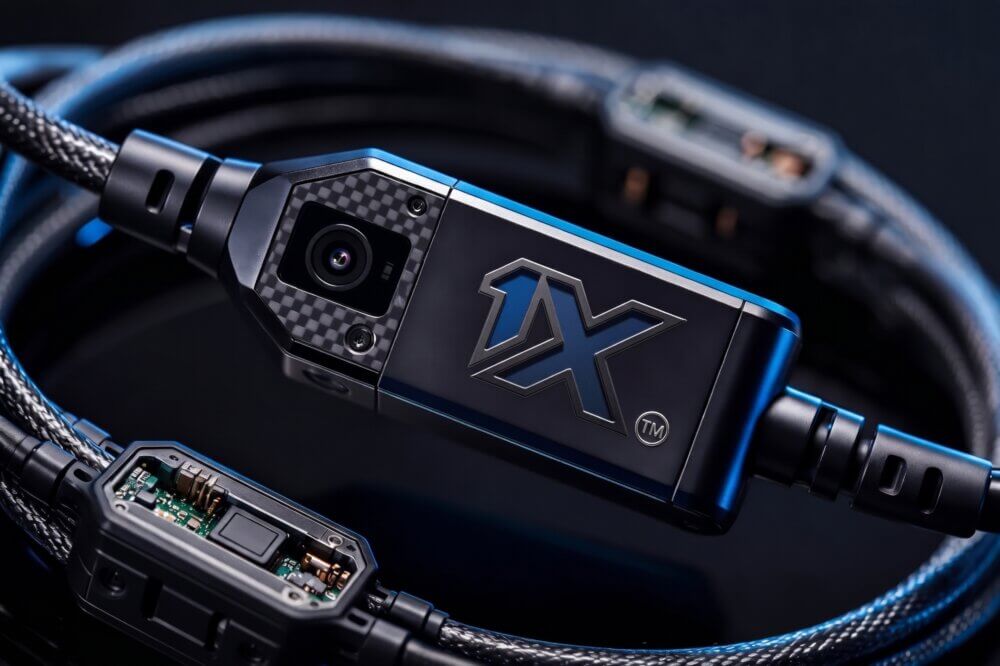
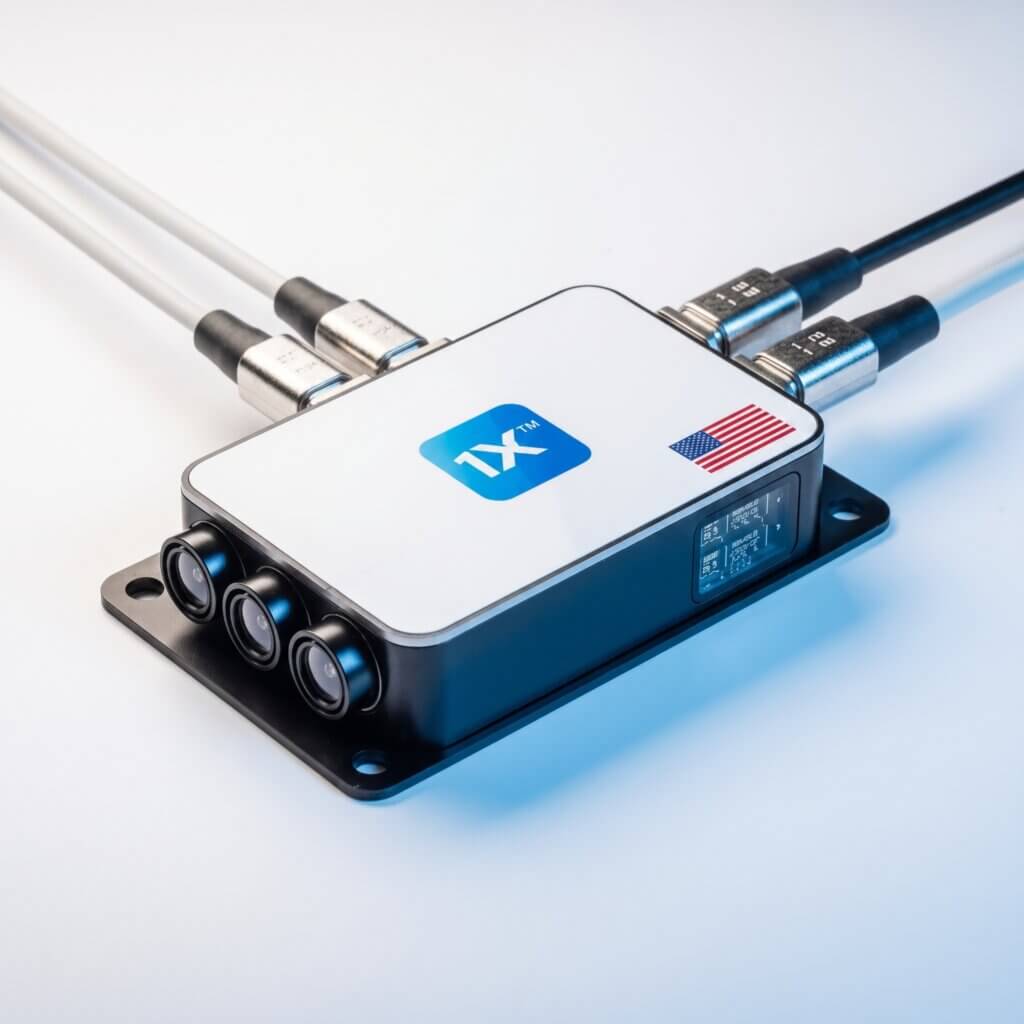
3. Chip-Embedded & Edge-Intelligent Cables Assemblies containing embedded microcontrollers, ASICs, eMarker chips, sensor hubs, or small PCBs for local diagnostics, signal conditioning, identification, or limited edge processing. This approach is particularly valuable in extreme-motion high-cycle cables, where embedded sensing enables predictive maintenance before mechanical fatigue leads to failure.
4. Smart Connectors & Intelligent Interconnects Connectors with embedded electronics for real-time health monitoring (contact resistance, temperature, mating cycles), Built-In Test, diagnostics, data logging, or usage tracking. These turn the connector into an active system node. Key sectors include aerospace, spaceflight, defense, medical, industrial robotics, and subsea systems.
5. Actuating Textiles & Functional Fiber Systems Materials in which the cable or textile structure itself acts as a sensor or actuator, generating force or haptic feedback while carrying power and data. Leading directions include thin fluidic/electrofluidic fiber actuators woven into textiles and electroactive polymer (EAP) coated fabrics and yarns (Kilic Afsar et al., 2021; Wu et al., 2020).
Strategic Context Across Domains
Robotics (industrial, mobile, inspection, aerial, and undersea platforms) relies on advanced cabling for reliable high-cycle motion. Embedding intelligence helps manage the extreme flex demands of these systems.
Aerospace and spaceflight place unique demands on weight, radiation hardness, thermal performance, and long-term reliability. Smart cables and intelligent connectors are essential for satellites, launch vehicles, spacecraft, and emerging space data center concepts, where maintenance access is nonexistent and failure carries extreme consequences. The parallels with subsea environments are strong: both domains prize predictive capability and resilience in inaccessible settings.
Critical infrastructure operators (subsea networks, smart grids, buried systems) use intelligent cables to reduce OpEx and improve resilience against environmental and third-party damage.
1X™ Position
1X® TECHNOLOGIES maintains deep vertical integration in robotics hardware and advanced wire and cable systems. 1X™ designs and manufactures actuators, produces custom high-flex cable harnesses and energy chain solutions, and actively supplies specialized wire, cable, and electromechanical components for demanding applications.
1X™ already delivers smart cable technology for submarine cable applications and provides robots integrated with smart sensors and smart cable technology for inspection tasks. These capabilities align with 1X™ work across extreme environments, including aerospace and spaceflight considerations where high-reliability, intelligent cabling is mission-critical.
This foundation in smart submarine cabling, integrated inspection robotics, and advanced high-flex solutions positions 1X™ to support the full spectrum of intelligent connectivity needs in robotics, aerospace, space systems, and other high-performance domains.
Subsequent parts of this series examine each category in technical depth, highlight specific manufacturers and product examples, and identify opportunities where advanced cabling and intelligent interconnect technologies deliver measurable improvements in performance, reliability, and lifecycle management.
Condition-Monitoring & Predictive Smart Cables (Power, Industrial & Subsea)
Condition monitoring represents one of the most mature and widely implemented categories of smart cable technology. By transforming cables from passive conductors into active sources of operational intelligence, these systems enable a shift from reactive or time-based maintenance toward true predictive strategies. This capability is particularly valuable in robotics, aerospace, spaceflight, subsea operations, and critical infrastructure, where unplanned downtime or physical intervention carries significant cost and risk (Ghazali et al., 2024).
In high-flex extreme-motion applications designed for millions of flex cycles, embedded sensing provides early visibility into mechanical fatigue, temperature anomalies, or insulation stress long before failure occurs. The same principles deliver high value in inaccessible environments such as space and deep-sea systems, where the ability to diagnose issues remotely is often essential for continued operation.
Distributed Fiber Optic Sensing Technologies
One of the most powerful approaches to cable condition monitoring uses the optical fiber itself as a continuous distributed sensor.
Distributed Temperature Sensing (DTS) measures temperature continuously along the full length of a fiber, typically achieving spatial resolution of one meter or better. It relies on analysis of Raman scattering from light pulses traveling through the fiber. Temperature variations change the ratio of Stokes to anti-Stokes backscattered light, enabling precise thermal profiling without the need for discrete sensors at multiple points.
Distributed Acoustic Sensing (DAS) converts the same fiber into a highly sensitive vibration and acoustic sensor array. By detecting minute phase shifts in Rayleigh backscattered light, these systems can identify and locate mechanical disturbances, acoustic events, or strain changes over distances of tens of kilometers (Rashid et al., 2025).
Commercially available distributed sensing systems are deployed on subsea power cables, underground transmission lines, and pipeline infrastructure. They provide operators with a real-time view of asset health across long distances that would be impractical to achieve with conventional point sensors.
Embedded Discrete Sensors and Integrated Monitoring
While distributed fiber sensing excels for long linear assets, many robotic, aerospace, and industrial applications benefit from discrete sensors embedded directly within or alongside cables and harnesses. Parameters commonly monitored include partial discharge activity (an early indicator of insulation degradation), localized temperature at critical points, mechanical strain and torsion in dynamic applications, humidity and moisture ingress, and sheath current or dielectric loss in power systems.
Advanced platforms increasingly combine multiple sensor types with onboard processing or edge analytics. Multi-sensor fusion improves diagnostic accuracy and reduces false positives. These integrated systems translate raw data into actionable insights regarding remaining useful life and recommended maintenance timing.
For extreme-motion robotics and aerospace mechanisms engineered for very high flex cycle counts, embedding compact sensors and processing capability directly into cables allows operators to monitor cumulative fatigue based on actual duty cycles rather than conservative time-based replacement schedules.
Commercial Condition-Monitoring Platforms
A range of advanced commercial platforms now exist that combine distributed sensing, discrete sensors, and analytics capabilities. These systems are used across power transmission, industrial automation, robotics, and subsea infrastructure. They support both standalone monitoring and integration into broader asset management or digital twin environments.
1X® TECHNOLOGIES designs and manufactures integrated condition-monitoring cable solutions for high-flex and extreme-environment applications. Through its vertical integration in custom cable systems and harnesses, 1X® delivers monitoring capabilities tailored to the performance and reliability requirements of robotics, inspection systems, and other demanding platforms.
SMART Subsea Cables and Large-Scale Intelligent Infrastructure
The Science Monitoring And Reliable Telecommunications (SMART) Subsea Cables initiative demonstrates the potential of embedding intelligence into large-scale cable systems at a global level. Rather than deploying separate scientific sensor networks, the program equips new commercial transoceanic fiber-optic cables with scientific sensor packages at repeater nodes along with dedicated sensing fibers.
Core objectives include monitoring ocean heat content and circulation, providing early warning for seismic and tsunami events, and collecting long-term environmental and geophysical data.
Notable progress includes a successful demonstration deployment of a 21 km SMART cable in the Ionian Sea that has been delivering real-time sensor data since late 2023. Larger systems spanning thousands of kilometers are currently in manufacturing or advanced planning stages, with initial deployments targeted for 2026–2027.
These large-scale intelligent cable systems highlight the growing importance of condition monitoring and distributed sensing in environments where physical access is extremely limited — a challenge shared with both deep-sea and space-based applications.
Relevance to 1X™ Capabilities in Extreme Environments
1X® TECHNOLOGIES brings relevant experience delivering cable systems for demanding applications, including smart cable technology for submarine environments and robots integrated with smart sensors and cable systems for inspection tasks. These capabilities extend to high-flex, extreme-motion harnesses where embedded monitoring can significantly improve reliability and maintenance predictability.
By combining custom cable engineering with condition-monitoring technologies, 1X® offers integrated solutions that address the specific challenges of robotics operating in dynamic or inaccessible environments, as well as aerospace and spaceflight applications where weight, reliability, and long-term performance are critical.
Condition-monitoring smart cables are no longer a niche technology. They are becoming a standard expectation in high-performance systems where uptime, safety, and lifecycle cost management are priorities.
Self-Healing Cables & Advanced Insulation Materials
Self-healing cable technology addresses one of the most persistent vulnerabilities in cable systems: mechanical damage to insulation. In traditional cables, even minor cuts, punctures, or abrasions can allow moisture ingress, leading to corrosion, electrical leakage, and eventual failure. This problem is especially costly in environments where physical inspection or repair is difficult or impossible — such as buried power distribution, subsea systems, aerospace, spaceflight, and complex robotic installations.
Self-healing cables incorporate specialized materials that can autonomously respond to damage, sealing breaches and restoring insulation integrity without human intervention. While still an emerging category compared to condition-monitoring systems, self-healing technology is gaining traction in applications where reliability and reduced maintenance are critical (Peng et al., 2018).
Commercial Self-Healing Cable Systems
Advanced commercial self-healing cables are primarily used in underground power distribution. These systems typically feature a multi-layer insulation design that includes channels or reservoirs containing a specialized sealing compound. When the outer jacket and insulation are damaged — for example by excavation equipment, abrasion, or rock movement — the compound flows into the breach, filling voids and blocking moisture from reaching the conductor.
The key performance requirements for effective self-healing compounds include:
- Ability to flow into and seal damage under a range of temperatures
- Strong dielectric properties to maintain electrical insulation after sealing
- Long-term stability and resistance to degradation
- Clean handling characteristics during installation
These systems are designed to reduce “secondary failures” — situations where initial mechanical damage leads to progressive electrical degradation over time. By addressing damage at the moment it occurs, self-healing cables can significantly extend service life and reduce the frequency of costly excavations or replacements.
How Self-Healing Technology Works
Most commercial self-healing approaches rely on a viscous, flowable sealant that remains contained within the cable construction until damage occurs. Upon breach, the material migrates into the damaged area due to gravitational or pressure forces, creating a barrier against moisture. The compound is engineered to have appropriate viscosity — fluid enough to flow into small openings but cohesive enough to remain in place after sealing.
Research into more advanced self-healing materials is exploring several additional mechanisms, including dynamic polymer chemistries (such as host-guest interactions or reversible bonds) that can reform after being cut or punctured, liquid metal cores within elastomeric sheaths that can reconnect both mechanically and electrically after severance, and microcapsule or vascular systems that release healing agents when damage is detected.
While many of these advanced material approaches are still primarily at the research or early development stage, they point toward future cables that could recover from more severe damage, including conductor-level issues.
Relevance to Extreme and High-Performance Applications
Self-healing capabilities offer particular value in several demanding environments:
- Subsea and buried infrastructure — Where access for repair is extremely expensive or logistically challenging.
- Robotics and extreme-motion systems — High-flex cables in dynamic applications are subject to repeated mechanical stress. Self-healing properties could reduce the impact of minor insulation damage accumulated over millions of flex cycles.
- Aerospace and spaceflight — Weight and reliability are paramount. Cables that can autonomously address minor damage offer advantages in long-duration missions where inspection is limited.
- Space and subsea symmetry — Both environments share the characteristic of high intervention costs, making any technology that reduces the likelihood of failure highly valuable.
As robotic systems become more complex and operate in harsher or less accessible environments, the ability of cables to tolerate and recover from minor damage becomes increasingly important for overall system reliability.
Connecting Smart Cables and Intelligent Connectors to the 1X™ Protected Ecosystem
Smart cables and intelligent connectors are not merely passive infrastructure. They form the critical physical and data layer that enables the full performance of advanced semiconductor technology, sophisticated sensor systems, and software-defined intelligence across the 1X™ protected ecosystem.
The Role of Advanced Silicon and Integrated Electronics
At the core of modern intelligent systems are highly integrated semiconductor solutions, including Systems-on-Chip (SoCs), Neural Processing Units (NPUs), AI accelerators, and specialized microcontrollers. These chips combine multiple functions — such as AI inference, real-time sensor processing, power management, and high-speed communication — into compact, high-performance packages. In robotics, autonomous systems, and advanced electronics, these processors must handle massive amounts of data from numerous sensors while executing complex control algorithms with minimal latency.
However, the capabilities of these advanced chips can only be fully realized when paired with equally capable connectivity. High-bandwidth, low-latency data transmission between processors and peripheral components is essential. This is where 1X® smart cables and intelligent connectors deliver critical value. They are engineered to maintain signal integrity under extreme mechanical stress, support high data rates, and incorporate embedded intelligence that allows localized diagnostics and data management closer to the point of action.
By integrating protected semiconductor technology with advanced cabling solutions, 1X® TECHNOLOGIES creates systems in which the computational power of modern chips is fully supported by robust, intelligent physical connectivity.
Sensors and the Data Demands of Intelligent Systems
Modern robotic and autonomous systems rely on dense arrays of sensors to perceive and interact with their environment. These include vision systems (cameras and depth sensors), force and torque sensors, inertial measurement units (IMUs), temperature and environmental sensors, and strain gauges embedded in mechanical structures. Each of these sensors generates continuous streams of data that must be transmitted reliably to central processors or edge computing modules.
The volume and velocity of sensor data in advanced systems continue to increase as AI models become more sophisticated and real-time decision-making becomes more critical. Traditional passive cabling often struggles to meet these demands, particularly in high-flex or extreme-motion applications where signal degradation, electromagnetic interference, or mechanical fatigue can compromise performance.
1X® smart cables address these challenges through embedded sensing, shielding, and in some cases, localized processing capabilities. Intelligent connectors further enhance this by enabling real-time monitoring of connection health, temperature, and signal quality — allowing the system to detect developing issues before they impact chip-level performance or overall system reliability.
In this context, smart cables and intelligent connectors function as an extension of the sensor and electronics layer. They ensure that the rich data generated by advanced sensors can be delivered cleanly and reliably to the powerful chips that process it.
Software, Firmware, and AI Systems
The performance of protected 1X™ semiconductor technology is closely tied to the software and AI systems that run on it. Embedded firmware manages low-level hardware control, sensor interfacing, and real-time operations, while higher-level AI models perform perception, planning, and decision-making tasks. These software layers depend on consistent, high-quality data exchange between chips, sensors, and actuators.
Smart cables and intelligent connectors play a direct role in supporting these software-defined functions. By providing reliable power and data pathways, and by incorporating diagnostic intelligence at the connection level, they reduce the risk of data corruption or communication failures that could degrade AI performance or trigger system faults. In some architectures, localized processing within intelligent connectors or along smart cables can even offload certain tasks from central chips, improving overall system efficiency and responsiveness.
Integrated Ecosystem
Taken together, advanced silicon, sophisticated sensor systems, intelligent software, and high-performance cabling form a tightly integrated ecosystem. 1X® TECHNOLOGIES designs and manufactures solutions across these domains, ensuring that the computational power of modern chips, the data richness of advanced sensors, and the intelligence of software systems are supported by equally capable physical connectivity.
Smart cables and intelligent connectors are therefore not ancillary components — they are foundational elements that enable the full potential of the protected 1X™ ecosystem to be realized in demanding real-world applications.
1X™ Capabilities in High-Reliability Cable Systems
1X® TECHNOLOGIES designs and manufactures advanced cable solutions for demanding applications, including custom high-flex harnesses and systems for extreme environments. Through its vertical integration in cable engineering and component manufacturing, 1X® is positioned to incorporate self-healing and high-reliability insulation technologies into customer-specific solutions where durability and reduced maintenance are priorities.
As self-healing materials continue to mature, the ability to integrate them into custom-designed cable systems for robotics, inspection platforms, and aerospace applications represents a meaningful opportunity to improve long-term performance.
Self-healing cable technology is still evolving, but it addresses a fundamental limitation of conventional cables. Combined with condition-monitoring systems, it offers a powerful approach to improving reliability in applications where failure is particularly costly.
High-Performance Flexible & Robotic Cables
High-performance flexible cables are among the most critical and technically demanding components in modern robotics and dynamic systems. In applications involving continuous or repetitive motion — such as robotic arms, mobile platforms, gimbals, inspection systems, and aerospace mechanisms — cables must reliably transmit power, data, and control signals while withstanding millions of flex and torsional cycles without degradation.
Unlike static cabling, these systems operate under constant mechanical stress. Failure in a high-flex cable harness can result in costly downtime, safety issues, or mission failure, particularly in environments where access for repair is limited. As a result, the design and manufacture of extreme-motion cables has become a specialized engineering discipline focused on material selection, conductor construction, insulation systems, and mechanical protection.
Performance Requirements for Extreme-Motion Cables
Cables designed for high-flex and torsional applications must meet several stringent requirements:
- Flex life: Many industrial and robotic applications require cables to withstand 5 to 10 million or more bending cycles, with some specialized systems targeting over 100 million cycles.
- Torsional performance: In six-axis robots and rotating mechanisms, cables must resist twisting forces without conductor breakage or insulation damage.
- Hybrid construction: Most advanced systems combine power conductors, signal pairs, data cables (such as Ethernet or feedback lines), and sometimes pneumatic or fluid lines within a single harness.
- Environmental resistance: Resistance to oils, chemicals, abrasion, temperature extremes, and in some cases radiation or high vacuum.
- Low friction and bend radius: Optimized jacket materials and internal construction to minimize stress during motion and allow tight routing in compact robotic designs.
These requirements drive the use of specialized conductor stranding (typically high strand-count copper), advanced insulation and jacketing compounds (such as polyurethane or specialized thermoplastic elastomers), and carefully engineered internal geometries to manage mechanical stress.
Design Approaches for High-Flex and Torsional Cables
Several engineering strategies are commonly employed to achieve long service life under dynamic conditions:
- Optimized stranding: Finer stranding and specific lay lengths reduce stress concentration during bending and torsion.
- Layered construction: Careful arrangement of power, signal, and data elements to minimize internal friction and differential movement.
- Energy chain and dresspack systems: Many robotic installations use specialized cable carriers (energy chains) that guide and protect cables through defined motion paths, significantly extending service life.
- Torsional cable designs: Cables specifically engineered with counter-rotating layers or specialized internal structures to handle continuous twisting without accumulating stress.
In addition to mechanical durability, modern high-flex cable systems increasingly incorporate features that support condition monitoring, such as integrated sensor elements or designs that facilitate the addition of external monitoring.
Integration with Condition Monitoring
One of the most effective ways to manage high-flex cables operating at extreme cycle counts is through the integration of condition-monitoring capabilities. By embedding or attaching sensors that track parameters such as temperature, strain, or electrical performance, operators can move from time-based replacement to predictive maintenance based on actual usage and wear (Zaman et al., 2022).
This approach is particularly valuable in high-volume robotic production cells, aerospace mechanisms with limited maintenance access, subsea and inspection robotics operating in remote environments, and any application where unplanned downtime carries high costs.
Combining advanced mechanical cable design with embedded sensing creates systems that are both durable and intelligent — capable of operating for millions of cycles while providing early warning of developing issues.
Applications Across Demanding Environments
High-performance flexible cables are essential in multiple sectors:
- Robotics: Industrial arms, collaborative robots, mobile platforms, and inspection systems all rely on cables that can survive continuous dynamic motion.
- Aerospace and spaceflight: Mechanisms such as solar array deployment, robotic arms on spacecraft, and satellite positioning systems require lightweight, high-reliability flex cables capable of operating in extreme environments.
- Subsea and harsh environments: Remotely operated vehicles (ROVs), underwater manipulators, and subsea infrastructure use specialized high-flex cables designed for pressure, corrosion, and long service intervals.
In all of these applications, the cable harness is not a commodity component but a performance-critical subsystem that directly influences overall system reliability and lifecycle cost.
1X® Capabilities in High-Performance Cable Systems
1X® TECHNOLOGIES designs and manufactures custom high-flex cable harnesses and energy chain solutions for demanding robotic and extreme-environment applications. Through its vertical integration in actuator development, cable engineering, and system assembly, 1X® delivers complete connectivity solutions optimized for high-cycle motion, torsional stress, and harsh operating conditions.
This capability allows 1X® to provide integrated systems that combine mechanical durability with options for condition monitoring, supporting the reliability requirements of advanced robotics, inspection platforms, and other high-performance applications.
As robotic systems continue to increase in complexity and operate in more challenging environments, the importance of purpose-engineered high-flex cable systems will continue to grow. When combined with smart monitoring and, where applicable, self-healing technologies, these cables form a critical foundation for reliable long-term operation.
Chip-Embedded Cables & Edge-Intelligent Systems
As systems become more complex and operate in environments where reliability and rapid diagnostics are essential, there is growing interest in moving intelligence directly into the cable itself. Chip-embedded cables and edge-intelligent cable assemblies incorporate active electronic components — such as microcontrollers, application-specific integrated circuits (ASICs), sensor hubs, or identification chips — within the cable or its connectors.
This approach transforms the cable from a purely passive transmission medium into an active participant that can perform local processing, diagnostics, identification, or protocol management. While still an emerging capability in many industrial and robotic applications, chip-embedded technology is already established in certain high-reliability and consumer segments and is expanding into more demanding environments.
Types of Embedded Intelligence in Cables
Several forms of embedded electronics are used in advanced cable systems:
- Identification and capability chips — Small integrated circuits that store information about the cable’s specifications, such as current-carrying capacity, data rate capability, or calibration data. These chips allow connected systems to automatically recognize cable characteristics and adjust operation accordingly.
- Sensor hubs and condition-monitoring electronics — Compact circuits that interface with embedded or attached sensors to monitor parameters like temperature, strain, or electrical performance and transmit data locally or to a central system.
- Signal conditioning and protocol conversion — Electronics that perform tasks such as amplification, filtering, or conversion between different communication protocols directly within the cable assembly.
- Edge processing capabilities — In more advanced implementations, small microcontrollers or processors can perform basic diagnostics, data logging, or decision-making at the cable level, reducing the need to transmit all raw data to a central controller.
These components are typically integrated either within oversized connectors or in dedicated sections of the cable assembly where space and mechanical protection can be provided.
Benefits of Chip-Embedded Cable Systems
Embedding intelligence in cables offers several advantages, particularly in complex or hard-to-access systems:
- Improved diagnostics and predictive maintenance — Local processing can detect developing issues and provide early warnings before failure occurs.
- Simplified system architecture — Some signal conditioning or protocol handling can be moved out of the main controller and into the cable, reducing complexity at the system level.
- Enhanced traceability and security — Identification chips can support authentication, usage tracking, and counterfeit prevention.
- Faster response times — Certain decisions or data filtering can occur locally rather than requiring round-trip communication with a central processor.
- Better performance in extreme environments — In space, subsea, or high-flex robotic applications, local intelligence can help manage data transmission challenges caused by distance, interference, or motion.
For high-cycle extreme-motion cables, embedding sensing and basic processing capability allows operators to track actual mechanical stress and electrical performance over millions of flex cycles, supporting more accurate remaining-life predictions.
Applications in Demanding Environments
Chip-embedded and edge-intelligent cables are relevant across several sectors:
- Robotics and automation — Especially in systems with many moving cables where centralized monitoring of every harness becomes complex. Embedded diagnostics can simplify maintenance and improve uptime.
- Aerospace and spaceflight — Weight savings, reliability, and the inability to perform physical inspections during missions make local intelligence valuable for health monitoring and fault detection.
- Subsea and remote systems — Long cable runs and difficult access favor cables that can perform some level of self-diagnosis and report status without requiring constant external interrogation.
- High-reliability industrial and inspection platforms — Where traceability, usage tracking, and early fault detection deliver operational and safety benefits.
As robotic systems grow in complexity and operate more autonomously, the ability to embed intelligence at the cable level is expected to become increasingly important.
1X® Capabilities in Intelligent Cable Systems
1X® TECHNOLOGIES designs and manufactures custom cable harnesses and integrated connectivity solutions for advanced robotic and extreme-environment applications. Through its vertical integration in cable engineering and system development, 1X® can incorporate embedded sensing, diagnostics, and edge-intelligent features into customer-specific solutions where local processing and enhanced reliability are required.
This capability allows 1X® to deliver cable systems that combine mechanical durability with active monitoring and diagnostic functions, supporting the performance needs of sophisticated robotics, inspection systems, and other high-reliability platforms.
Embedding intelligence directly into cables represents a natural evolution in how connectivity is engineered for complex systems. When combined with high-flex mechanical design, condition monitoring, and where applicable self-healing materials, chip-embedded cables contribute to more resilient and maintainable architectures across robotics, aerospace, and critical infrastructure.
Smart Connectors & Intelligent Interconnects
Connectors have traditionally been viewed as passive mechanical interfaces whose primary role is to provide reliable electrical contact between cables and components. In advanced systems, however, connectors are increasingly becoming active, intelligent elements that contribute to system diagnostics, reliability, and functionality.
Smart connectors incorporate embedded electronics that enable capabilities such as real-time health monitoring, built-in diagnostics, data logging, usage tracking, and in some cases limited signal conditioning or edge processing. This evolution transforms the connector from a simple point of connection into an active node within the overall system architecture.
The Evolution Toward Intelligent Connectors
As systems grow more complex and operate in environments where maintenance access is limited, the ability to monitor connector health and performance becomes highly valuable. Traditional failure modes in connectors — such as increased contact resistance due to wear, contamination, or fretting, temperature rise under load, or mechanical degradation from repeated mating — can now be detected and tracked in real time.
Smart connectors typically integrate small electronic components directly into the connector housing or backshell. These components can monitor electrical and environmental parameters, store operational data, and communicate status information to the host system. In some designs, they also support advanced diagnostic techniques such as reflectometry, which can detect and locate faults along the connected cable.
Key Functions of Smart Connectors
Common capabilities found in intelligent interconnect systems include:
- Health and condition monitoring — Measurement of contact resistance, temperature at critical points, and changes in electrical performance over time.
- Usage and lifecycle tracking — Recording of mating cycles, operating hours, or environmental exposure to support predictive maintenance and determine remaining useful life.
- Built-in diagnostics — Onboard electronics that can perform self-tests or more advanced fault detection methods, such as time-domain reflectometry.
- Identification and traceability — Embedded memory (such as EEPROM) or identification chips that store device information, calibration data, or usage history. This is particularly important in medical and regulated applications for traceability and to prevent unauthorized reuse.
- Signal conditioning and protocol support — Some connectors include electronics for amplification, filtering, or protocol conversion, reducing the burden on the main system controller.
These functions help shift maintenance strategies from reactive or scheduled replacement toward condition-based approaches, improving both reliability and cost efficiency.
Applications Across Demanding Sectors
Smart connectors deliver value in several high-performance and regulated industries:
- Aerospace and defense — Where high reliability, weight optimization, and the ability to detect developing issues before they cause failure are critical. Intelligent connectors support health monitoring in aircraft, satellites, and ground systems.
- Medical devices — Connectors with embedded memory and usage tracking help ensure device traceability, prevent unauthorized reuse of single-use components, and support regulatory compliance.
- Robotics and industrial automation — Especially in high-cycle or mission-critical robotic systems where connector wear can lead to intermittent faults that are difficult to diagnose.
- Subsea and remote systems — Long cable runs and difficult access make local diagnostics at the connector level highly beneficial.
- Electric vehicles and high-power systems — Monitoring of high-current connections for temperature rise and contact integrity supports both safety and longevity.
In environments such as spaceflight and deep-sea operations, where physical inspection is extremely limited or impossible during operation, smart connectors provide valuable visibility into system health without requiring direct access.
Integration with Broader Cable Systems
Smart connectors work most effectively when integrated with advanced cable designs. High-flex robotic cables, condition-monitoring systems, and chip-embedded assemblies can all benefit from intelligent connectors at the termination points. Together, these technologies create end-to-end connectivity solutions with visibility into both the cable and the connection interfaces.
This integrated approach is particularly powerful in extreme-motion applications, where both the cable and the connectors experience significant mechanical stress over millions of cycles.
1X™ Capabilities in Intelligent Interconnect Solutions
1X® TECHNOLOGIES designs and manufactures custom cable harnesses and integrated connectivity solutions for advanced robotic, inspection, and extreme-environment applications. Through its capabilities in cable engineering and system integration, 1X™ can incorporate smart connector technologies into customer-specific solutions where health monitoring, diagnostics, and enhanced reliability are required.
This allows 1X™ to deliver complete harness and interconnect systems that combine mechanical durability with active monitoring and diagnostic functions, supporting the performance and maintainability needs of sophisticated robotics and other high-reliability platforms.
As systems continue to increase in complexity and autonomy, the role of connectors is evolving from simple interfaces to intelligent components that actively contribute to system health and operational awareness. When combined with advanced cabling, condition monitoring, and edge intelligence, smart connectors form an important part of the connectivity infrastructure required for next-generation robotics, aerospace, and critical systems.
Actuating Textiles, Electroactive Materials & Fiber Actuators
One of the most significant frontiers in advanced connectivity is the convergence of textiles, fiber structures, and actuation. In this emerging field, specialized fibers and fabrics can function as actuators and sensors while still carrying power and data. These actuating textiles and functional fiber systems represent a natural evolution beyond traditional cables, enabling new possibilities in soft robotics, wearable systems, and human-assistive devices (Kilic Afsar et al., 2021; Wu et al., 2020).
Fiber-Based Actuators
A leading approach involves thin, flexible fiber actuators that can be woven or knitted into textiles. These fibers typically consist of an elastomeric core or chamber surrounded by a constraining braided or woven sleeve. When internal pressure is applied, the structure produces linear contraction, bending, or more complex programmed motions through strategic mechanical design.
More recent developments integrate micro-scale electrofluidic pumping mechanisms directly into the fiber. This allows electrical control of actuation without external fluidic systems, making the technology more practical for integration into garments or soft robotic structures. Many of these fiber actuators also include integrated sensing elements that provide real-time feedback on strain or deformation.
Importantly, these fiber actuators can be manufactured using winding and braiding processes that are closely related to traditional cable and coil winding techniques. The resulting structures often resemble high-performance cables in both appearance and production method, suggesting strong potential synergy with existing cable manufacturing expertise.
For further reading and visual demonstrations, see:
- MIT Media Lab – OmniFiber Project: https://www.media.mit.edu/projects/omnifiber-millifluidic-muscle-fibers/overview/
- Video: “Robotic fibers can make breath-monitoring garments” (MIT Media Lab / KTH / Uppsala University): https://www.youtube.com/watch?v=JDT7Nt_sBqQ
Electroactive Polymer Textile Actuators
Another established direction involves coating or integrating electroactive polymers onto textile substrates such as yarns and fabrics. Materials such as polypyrrole and PEDOT-based composites can generate contraction, expansion, or bending when low voltage is applied, due to electrochemical ion movement within the polymer layer.
When these active materials are applied to yarns and then woven or bundled into textile structures, the total force output can be scaled while preserving flexibility. Research in this area continues to focus on improving force density, cycle life, air stability, and integration with power and data transmission pathways.
Integration with Traditional Cabling and Manufacturing
These actuating fibers and textiles open interesting possibilities for hybrid systems that combine conventional power and data transmission with integrated sensing and motion generation. Because many of these fiber actuators are produced using winding, braiding, and textile processes that parallel existing cable manufacturing methods, there is natural compatibility with companies that already possess advanced cable winding and coil winding capabilities.
This manufacturing overlap suggests that future systems could incorporate actuating fiber sections alongside or within traditional high-flex cable harnesses, creating multifunctional connectivity solutions that deliver power, data, sensing, and actuation through integrated structures.
Applications
Actuating textiles and fiber actuators are being explored for:
- Soft exosuits and wearable assistive devices
- Haptic feedback systems in clothing or interfaces
- Medical rehabilitation and monitoring devices
- Soft robotic grippers and manipulators
- Hybrid cable-actuator systems for next-generation robotics
These technologies are still maturing, but they represent a meaningful step toward more integrated, compliant, and multifunctional connectivity solutions.
1X™ Position
1X® TECHNOLOGIES designs and manufactures custom high-flex cable harnesses, energy chains, and coil-wound components for advanced robotic and extreme-environment applications. The manufacturing processes used for many actuating fiber technologies — particularly winding and braiding — align closely with existing cable and coil production methods. This creates a natural pathway for 1X™ to explore integration of multifunctional fiber and textile actuator technologies into future cable and harness solutions as these materials continue to develop.
The convergence of traditional cabling with actuating and sensing fibers represents one of the more transformative directions in the field. It has the potential to fundamentally expand what a “cable” can do — moving beyond passive transmission toward active, multifunctional systems.
Strategic Outlook, Convergence Trends & 1X™ Path Forward
Over the course of this series, we have examined how cables and interconnects are evolving from passive components into intelligent, multifunctional systems. This transformation is being driven by advances in condition monitoring, self-healing materials, embedded electronics, smart connectors, and actuating fibers and textiles. Together, these developments are redefining what is possible in robotics, aerospace, spaceflight, subsea systems, and critical infrastructure (Rashid et al., 2025).
Convergence of Technologies
Several important trends are converging:
- Condition monitoring is becoming more widespread, with both distributed fiber optic sensing and embedded sensors enabling predictive maintenance in high-flex and extreme-motion applications.
- Self-healing materials offer the potential to reduce the impact of mechanical damage in environments where repair is difficult or costly.
- Chip-embedded cables and smart connectors are moving intelligence closer to the point of action, supporting diagnostics, traceability, and local processing.
- Actuating textiles and fiber actuators are blurring the line between cabling and motion generation, opening new possibilities for soft and hybrid robotic systems.
When combined, these technologies point toward future cable and harness systems that can sense their environment, adapt to damage, process information locally, and in some cases even generate motion — all while continuing to perform their traditional roles of power and data transmission.
This evolution is particularly relevant in extreme environments. Both spaceflight and subsea operations share the characteristic of limited or impossible physical access during operation. In these domains, cables and interconnects that can monitor their own health, provide early warnings, and potentially self-repair offer significant advantages in reliability and mission assurance. High-flex extreme-motion applications in robotics similarly benefit from systems designed for very high cycle counts with built-in intelligence to support predictive maintenance.
Challenges and Considerations
Despite the progress being made, several challenges remain:
- Integration complexity — Combining mechanical durability, sensing, embedded electronics, and actuation into reliable, manufacturable systems is technically demanding.
- Power and thermal management — Embedding active electronics and actuators increases power consumption and heat generation, which must be carefully managed, especially in compact or high-flex designs.
- Durability in harsh environments — Materials and electronics must withstand extreme temperatures, radiation, pressure, chemicals, and repeated mechanical stress over long periods.
- Cost and scalability — Many advanced technologies are still maturing, and achieving cost-effective production at scale remains an ongoing effort.
- Standards and interoperability — As intelligence moves into cables and connectors, new standards for communication, diagnostics, and safety will be needed.
Addressing these challenges will require continued collaboration between materials scientists, cable and connector engineers, roboticists, and systems integrators.
Opportunities Ahead
The convergence of these technologies creates meaningful opportunities across multiple sectors:
- Robotics — More reliable high-cycle systems, predictive maintenance, and eventually hybrid rigid/soft platforms that combine traditional cabling with actuating fibers.
- Aerospace and spaceflight — Lighter, more reliable, and more intelligent connectivity solutions for satellites, spacecraft, and emerging space infrastructure concepts.
- Subsea and remote systems — Improved resilience and reduced intervention requirements through self-monitoring and self-healing capabilities.
- Wearable and assistive systems — New categories of soft robotic and haptic devices enabled by actuating textiles.
Organizations that can integrate these capabilities into well-engineered, reliable products will be well positioned as the field continues to advance.
1X™ Position and Capabilities
1X® TECHNOLOGIES has developed vertical integration across actuator development, custom high-flex cable harnesses, energy chain systems, and coil winding. This integrated capability provides a strong foundation for addressing the evolving requirements of advanced connectivity systems.
1X™ already delivers solutions in smart cable technology for submarine applications and integrated robotic systems for inspection tasks. These existing capabilities in extreme-environment cabling, combined with experience in high-flex and torsional cable design, position 1X™ to participate in the development and delivery of next-generation systems that incorporate condition monitoring, embedded intelligence, and multifunctional materials.
As the industry moves toward more intelligent and integrated cable and interconnect solutions, 1X™’s focus on vertical integration and custom engineering provides a practical pathway to deliver reliable, high-performance solutions tailored to specific application requirements.
Closing Perspective
Cables and interconnects have always been essential to advanced machines. What is changing is their role — from passive infrastructure to active, intelligent components that contribute directly to system performance, reliability, and capability.
The technologies discussed in this series — condition monitoring, self-healing materials, chip-embedded systems, smart connectors, and actuating fibers — are at different stages of maturity. However, their convergence suggests a future in which the cable harness is no longer simply the nervous system of a machine, but an active participant in its operation and resilience.
For organizations operating in robotics, aerospace, space systems, subsea environments, or other high-performance domains, the ability to specify and integrate advanced cabling solutions will be an increasingly important factor in achieving reliable, efficient, and maintainable systems.
1X® TECHNOLOGIES remains committed to advancing capabilities in this critical area through continued investment in design, manufacturing, and system integration.
References
Kilic Afsar, O., Shtarbanov, A., Mor, H., Nakagaki, K., Forman, J., Jeong, S. H., Hjort, K., Höök, K., & Ishii, H. (2021). OmniFiber: Integrated fluidic fiber actuators for weaving movement-based interactions into the ‘fabric of everyday life’. Proceedings of the 34th Annual ACM Symposium on User Interface Software and Technology (UIST ’21). Association for Computing Machinery. https://doi.org/10.1145/3472749.3474802
Peng, L., et al. (2018). A novel self-healing power cable insulating material based on host-guest assembly. RSC Advances, 8(48), 27268–27276. https://doi.org/10.1039/C8RA04882G
Ruckdashel, R. R., Venkataraman, D., & Park, J. H. (2022). Smart e-textiles: Overview of components and outlook. Polymers, 14(15), 3107. https://doi.org/10.3390/polym14153107
Wu, Y., et al. (2020). Flexible and electroactive textile actuator enabled by PEDOT:PSS/MOF-derivative electrode ink. Frontiers in Bioengineering and Biotechnology, 8, 212. https://doi.org/10.3389/fbioe.2020.00212
Zhu, H. H., et al. (2022). Distributed acoustic sensing for monitoring linear infrastructure. Sensors, 22(19), 7537. https://doi.org/10.3390/s22197537
Zaman, S., et al. (2022). Smart e-textile systems: A review for healthcare applications. Electronics, 11(1), 99. https://doi.org/10.3390/electronics11010099
Ghazali, M. F., et al. (2024). State-of-the-art application and challenges of optical fibre distributed sensing in linear infrastructure. Optical Fiber Technology, 83, 103456. https://doi.org/10.1016/j.yofte.2024.103456
Rashid, A., et al. (2025). Research advances on distributed acoustic sensing technology and its applications. Photonics, 12(3), 196. https://doi.org/10.3390/photonics12030196